How Robotic Therapy is Better Than Traditional Manual Therapy in Stroke Rehabilitation. Robotic Therapy vs Traditional Physiotherapy for Stroke Rehabilitation: Which Delivers Better Recovery Outcomes?
Stroke is one of the leading causes of long-term disability worldwide. It can affect a person’s ability to walk, move an arm, maintain balance, speak clearly, perform daily activities, and live independently. For many stroke survivors, the recovery journey can be physically and emotionally challenging.
Fortunately, advances in neuro rehabilitation have significantly improved recovery possibilities. While traditional physiotherapy remains a cornerstone of stroke rehabilitation, modern robotic rehabilitation technology is transforming the way patients regain movement, mobility, and independence.
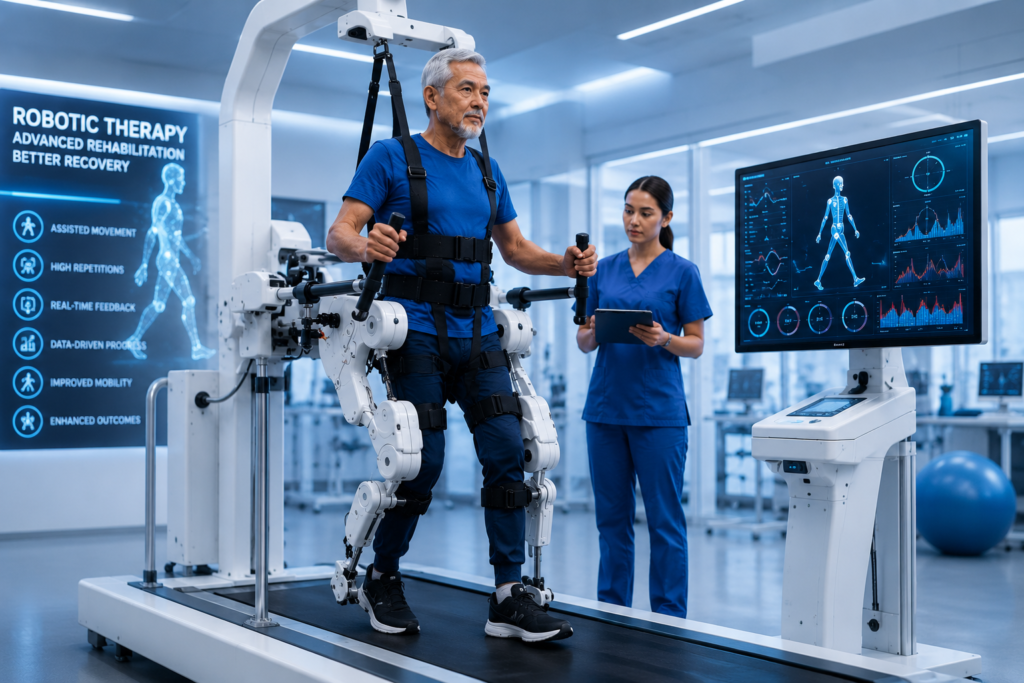
Today, robotic therapy is being used in advanced neuro rehabilitation centers to provide intensive, precise, and highly repetitive movement training that supports neurological recovery. By combining rehabilitation science with cutting-edge technology, robotic therapy is helping stroke survivors achieve recovery outcomes that were once difficult to attain through conventional rehabilitation alone.
In this article, we will explore how robotic therapy compares with traditional physiotherapy, why it is becoming an essential part of modern stroke rehabilitation, and how advanced robotic neuro rehabilitation can support better functional recovery.
Understanding Stroke Rehabilitation
A stroke occurs when blood flow to a part of the brain is interrupted, causing damage to brain cells. Depending on the area affected, a stroke may result in:
- Weakness or paralysis on one side of the body
- Difficulty walking
- Balance and coordination problems
- Reduced arm and hand function
- Speech difficulties
- Cognitive impairment
- Challenges in performing everyday activities
Stroke rehabilitation focuses on helping patients recover lost functions and adapt to any remaining limitations.
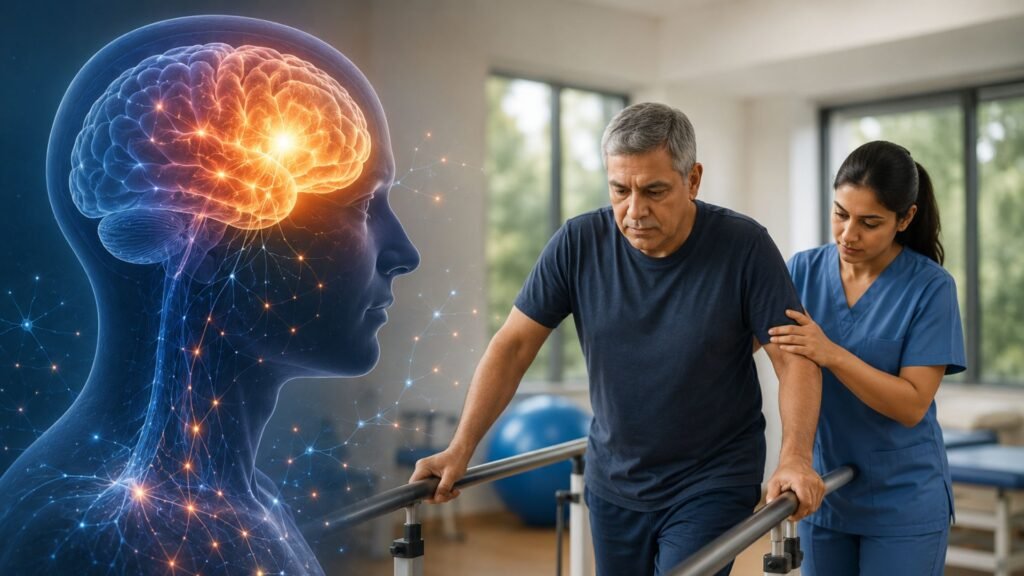
One of the most important concepts in stroke recovery is neuroplasticity. Neuroplasticity refers to the brain’s ability to reorganize itself and create new neural connections after injury. Through structured rehabilitation and repeated practice, healthy areas of the brain can learn to take over some of the functions affected by the stroke.
The success of rehabilitation often depends on:
- Early intervention
- Consistent therapy
- Repetitive movement practice
- Patient motivation
- Individualized treatment plans
- Continuous progress monitoring
Modern rehabilitation strategies are increasingly designed around these principles, which is one reason robotic rehabilitation has gained significant attention in recent years.
What is Traditional Physiotherapy for Stroke Rehabilitation?
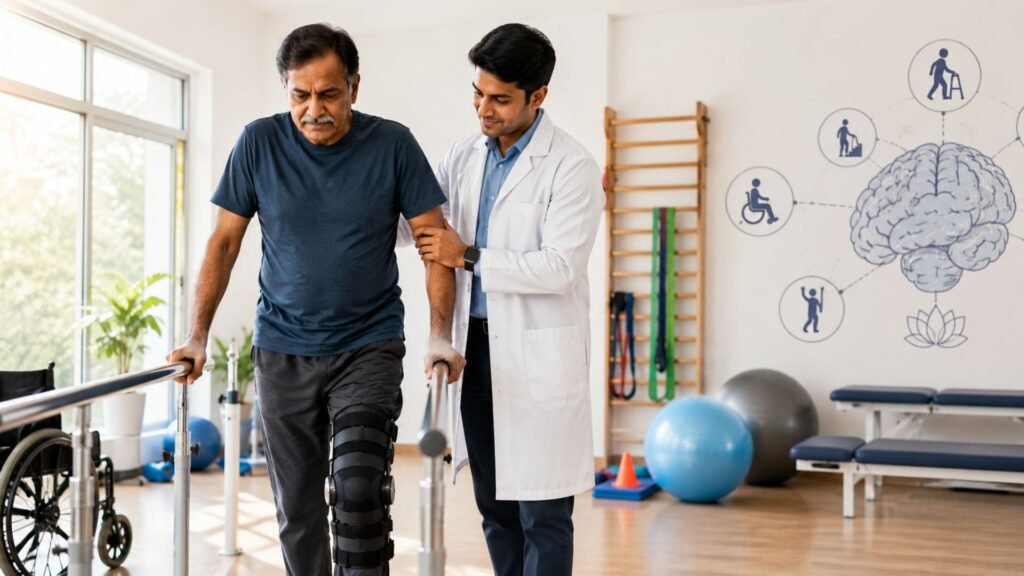
Traditional stroke rehabilitation relies on physiotherapists and occupational therapists to guide patients through exercises that improve strength, flexibility, balance, coordination, and mobility.
Common physiotherapy interventions include:
- Range of motion exercises
- Strengthening exercises
- Balance training
- Walking practice
- Functional movement training
- Posture correction
- Transfer training
- Coordination exercises
Traditional physiotherapy plays a vital role in stroke recovery because therapists can assess patients directly, provide hands-on assistance, and modify treatment plans based on individual needs.
Physiotherapists also help patients learn practical skills required for daily living, such as standing up safely, climbing stairs, maintaining balance, and improving mobility.
Despite its importance, traditional physiotherapy has certain limitations when it comes to delivering the intensity and consistency often required for optimal neurological recovery.
Limitations of Traditional Physiotherapy in Stroke Recovery
Limited Repetition During Therapy Sessions
Stroke recovery depends heavily on repeated movement practice. However, during conventional physiotherapy sessions, the number of repetitions that can be performed is often limited by time, therapist workload, and patient fatigue.
Variability in Movement Training
Even highly experienced therapists may deliver slightly different movement patterns between sessions. This variation is natural but can affect consistency during motor retraining.
Challenges in Severe Stroke Cases
Patients with significant weakness or paralysis often require extensive physical assistance. Delivering high-intensity rehabilitation manually can be physically demanding and time-consuming.
Subjective Progress Tracking
Progress is frequently evaluated through observation and clinical assessment. While these methods are important, they may not provide highly detailed performance data.
Therapist Workload and Physical Demands
Helping patients with gait training, balance exercises, and limb movement repeatedly throughout the day can be physically demanding for therapists.
These challenges do not reduce the value of physiotherapy. Instead, they highlight why advanced rehabilitation technologies have been developed to complement therapist-led care.
What is Robotic Therapy?
Robotic therapy is an advanced rehabilitation approach that uses specialized robotic devices to assist patients in performing precise, repetitive, and controlled movements.
The goal is not to replace physiotherapists but to enhance rehabilitation by allowing patients to perform more structured and intensive therapy.
Robotic rehabilitation systems can assist with:
- Walking rehabilitation
- Arm and hand recovery
- Balance training
- Postural control
- Functional movement retraining
- Coordination improvement
These systems use advanced sensors, intelligent software, and real-time performance monitoring to create personalized rehabilitation programs tailored to each patient’s needs.
By combining technology with clinical expertise, robotic therapy helps maximize the effectiveness of stroke rehabilitation.
How Robotic Therapy Works
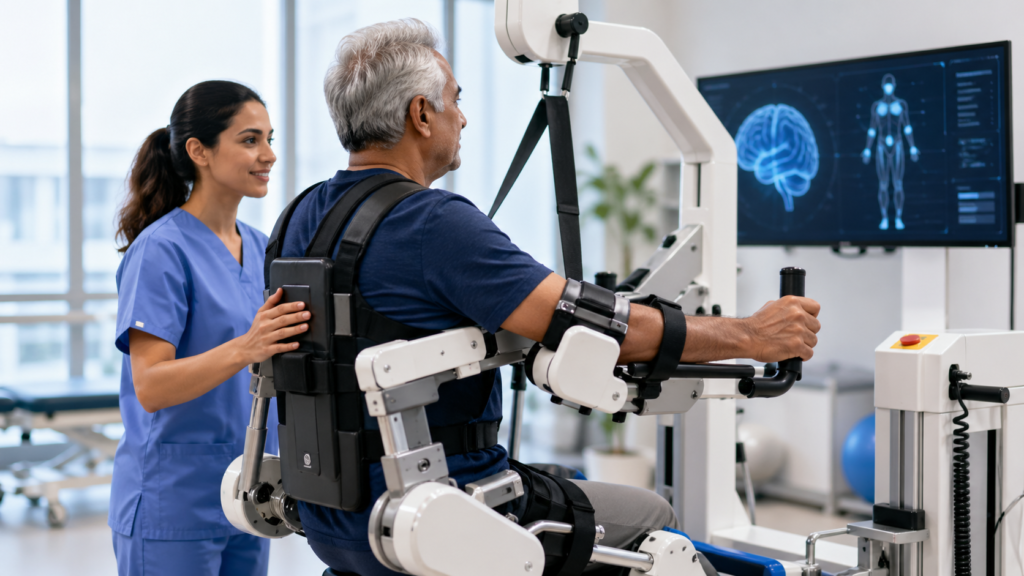
Robotic rehabilitation systems are designed to guide and support movement while continuously monitoring patient performance.
These systems can:
- Detect movement patterns
- Assist weakened muscles
- Support proper joint movement
- Measure strength and endurance
- Provide visual feedback
- Track progress over time
- Adjust difficulty levels automatically
Unlike conventional therapy, robotic systems can deliver highly consistent movement training throughout the session.
Many rehabilitation devices also include interactive training programs that encourage patient participation and improve motivation.
This combination of precision, consistency, and engagement makes robotic rehabilitation a powerful tool for neurological recovery.
Robotic Therapy vs Traditional Physiotherapy
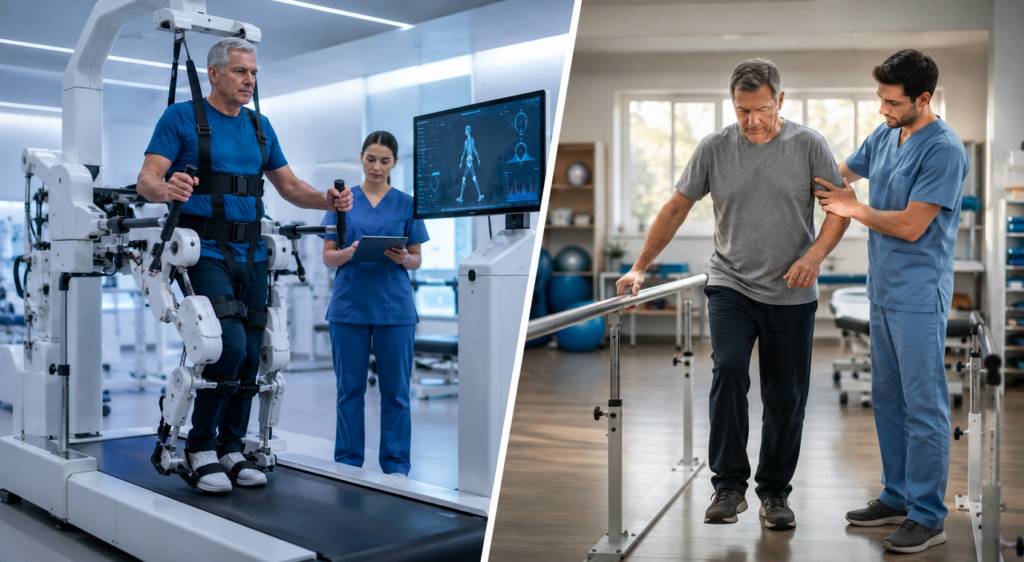
Both robotic therapy and traditional physiotherapy have important roles in stroke recovery. However, robotic rehabilitation offers several unique advantages.
Feature | Traditional Physiotherapy | Robotic Therapy |
Movement Repetition | Moderate | Very High |
Precision | Therapist Dependent | Highly Consistent |
Progress Monitoring | Observation Based | Data Driven |
Therapy Intensity | Moderate | High |
Patient Feedback | Limited | Real-Time |
Gait Training | Manual Support | Robotic Assistance |
Performance Tracking | Subjective | Objective |
Rehabilitation Consistency | Variable | Standardized |
This is one of the primary reasons why robotic rehabilitation is increasingly being adopted by leading neuro rehabilitation centers around the world.
Benefits of Robotic Therapy for Stroke Survivors
Improved Arm and Hand Function
Many stroke survivors experience weakness, stiffness, and reduced coordination in the upper limb.
Robotic upper limb rehabilitation can help improve:
- Arm mobility
- Hand function
- Grip strength
- Fine motor skills
- Functional independence
Patients often find it easier to perform repetitive therapeutic movements with robotic assistance, allowing them to practice more effectively.
Enhanced Walking Recovery
Walking difficulties are among the most common challenges faced by stroke survivors.
Robotic gait training systems help patients practice walking patterns in a safe and controlled environment while improving:
- Walking speed
- Balance
- Endurance
- Coordination
- Confidence
This intensive gait training can significantly contribute to mobility recovery.
Better Balance and Postural Control
Balance impairments can limit independence and increase the risk of falls.
Robotic rehabilitation programs often include specialized balance training that helps patients improve postural stability and movement control.
Personalized Rehabilitation Programs
Every stroke is different.
Robotic rehabilitation systems allow therapists to customize treatment based on:
- Stroke severity
- Functional limitations
- Recovery goals
- Endurance levels
- Progress over time
This individualized approach helps ensure that patients receive therapy appropriate for their specific needs.
Advanced Robotic Technologies Used in Modern Stroke Rehabilitation
Modern neuro rehabilitation centers use a variety of robotic technologies designed to address different aspects of stroke recovery.
Robotic Gait Training Systems
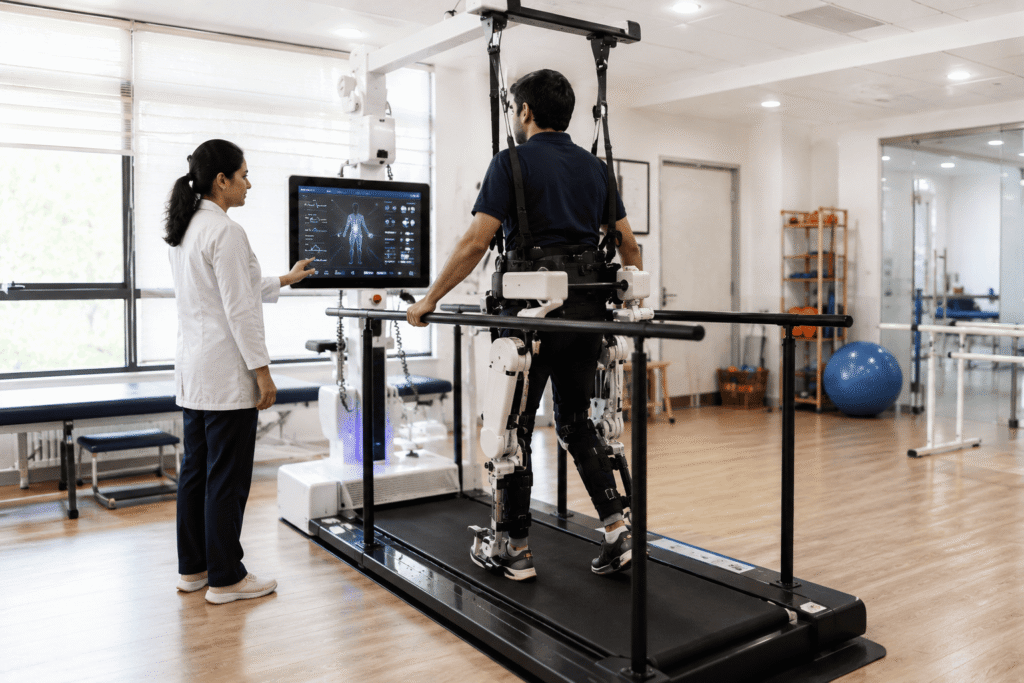
Walking recovery is often one of the biggest challenges after a stroke. Robotic gait training systems provide controlled walking practice while supporting the patient’s body weight and movement patterns.
Benefits include:
- Improved walking mechanics
- Better balance
- Increased endurance
- Enhanced gait symmetry
- Greater confidence while walking
These systems allow patients to perform a large number of walking repetitions in a safe environment, which is essential for motor relearning.
Upper Limb Robotic Rehabilitation
Arm and hand weakness can significantly affect independence after a stroke.
Upper limb robotic systems help patients practice:
- Reaching movements
- Grasping exercises
- Hand coordination
- Functional arm activities
- Fine motor control
The ability to perform repetitive upper limb exercises helps support neurological recovery and improve daily function.
Exoskeleton-Assisted Rehabilitation
Robotic exoskeletons are wearable devices that assist movement in patients with significant weakness or paralysis.
These technologies can support:
- Standing practice
- Walking training
- Weight shifting
- Postural control
- Functional mobility
Exoskeleton-assisted rehabilitation is becoming an important component of advanced neuro rehabilitation programs worldwide.
Sensor-Based Movement Analysis
Modern robotic rehabilitation systems use sophisticated sensors to analyze movement quality and performance.
Therapists can monitor:
- Joint movement
- Walking patterns
- Muscle performance
- Endurance levels
- Recovery progression
This objective data helps clinicians make more informed treatment decisions and personalize rehabilitation programs.
Scientific Evidence Supporting Robotic Rehabilitation
Robotic rehabilitation is supported by a growing body of clinical research and evidence-based practice.
Studies have shown that robotic-assisted rehabilitation can contribute to improvements in:
- Upper limb function
- Walking ability
- Movement coordination
- Balance control
- Functional independence
One of the reasons robotic rehabilitation is effective is its ability to provide intensive, task-specific, and repetitive movement training.
Research has demonstrated that when robotic rehabilitation is combined with traditional physiotherapy, many patients experience greater improvements than with conventional rehabilitation alone.
As rehabilitation science continues to evolve, robotic therapy is becoming an increasingly important component of modern stroke recovery programs.
Why Leading Neuro Rehabilitation Centers Are Investing in Robotic Therapy
The goal of every rehabilitation center is to help patients achieve the highest possible level of recovery.
Robotic rehabilitation offers several advantages that make it attractive to modern neuro rehabilitation facilities.
Higher Therapy Intensity
Patients can perform significantly more therapeutic movements compared to many conventional rehabilitation sessions.
Greater Precision
Robotic systems help ensure that movements are performed consistently and accurately.
Objective Progress Tracking
Detailed performance data allows therapists to monitor improvement and adjust treatment plans accordingly.
Better Patient Engagement
Interactive rehabilitation programs often improve patient motivation and participation.
Personalized Treatment
Robotic systems can be customized according to each patient’s specific condition, limitations, and recovery goals.
These advantages have contributed to the rapid adoption of robotic rehabilitation technologies in advanced stroke recovery programs around the world.
Why Combining Robotic Therapy with Traditional Physiotherapy Works Best
Although robotic rehabilitation offers many benefits, the most successful stroke recovery programs combine robotic technology with expert therapist-led care.
Traditional physiotherapy provides:
- Clinical assessment
- Hands-on guidance
- Functional training
- Patient education
- Emotional support
Robotic rehabilitation provides:
- High-intensity training
- Precision movement guidance
- Objective performance tracking
- Advanced gait rehabilitation
- Consistent exercise delivery
Together, these approaches create a comprehensive rehabilitation program designed to maximize recovery potential.
Rather than competing with physiotherapy, robotic therapy enhances the effectiveness of therapist-led rehabilitation.
Advanced Robotic Stroke Rehabilitation in Dehradun
Access to advanced rehabilitation technology is becoming increasingly important for stroke survivors seeking the best possible recovery outcomes.
At Advaith Ability in Dehradun, robotic neuro rehabilitation is integrated with evidence-based physiotherapy, occupational therapy, gait training, balance rehabilitation, and individualized treatment planning.
This multidisciplinary approach helps patients address multiple aspects of recovery, including:
- Mobility improvement
- Walking rehabilitation
- Balance enhancement
- Upper limb recovery
- Functional independence
- Confidence building
For patients across Dehradun, Uttarakhand, and nearby regions, advanced robotic rehabilitation offers access to modern recovery solutions that support long-term neurological improvement.
Common Misconceptions About Robotic Stroke Rehabilitation
Myth: Robots Replace Physiotherapists
Reality: Robotic systems are rehabilitation tools designed to assist therapists, not replace them. Clinical expertise remains essential throughout the recovery process.
Myth: Robotic Therapy Is Only for Severe Stroke Patients
Reality: Patients with mild, moderate, and severe impairments may all benefit from robotic rehabilitation depending on their specific needs.
Myth: Robotic Rehabilitation Is Experimental
Reality: Robotic rehabilitation is widely used in advanced neuro rehabilitation centers and is supported by a growing body of scientific evidence.
Myth: Technology Alone Guarantees Recovery
Reality: Recovery depends on multiple factors including stroke severity, patient participation, therapy consistency, and clinical expertise.
Myth: All Robotic Devices Are the Same
Reality: Different robotic technologies are designed for different rehabilitation goals, including gait training, balance improvement, upper limb recovery, and mobility enhancement.
Frequently Asked Questions
Is robotic therapy better than traditional physiotherapy for stroke rehabilitation?
Robotic therapy offers advantages such as greater precision, higher training intensity, and objective progress tracking. However, the best outcomes are often achieved when robotic rehabilitation is combined with expert physiotherapy and occupational therapy.
How does robotic therapy help stroke patients recover?
Robotic therapy supports structured movement training, promotes active participation, and allows patients to perform intensive rehabilitation exercises that support neurological recovery.
Can robotic therapy improve walking after a stroke?
Yes. Robotic gait training systems are specifically designed to improve walking ability, balance, endurance, and coordination.
Can robotic rehabilitation improve arm and hand function?
Yes. Upper limb robotic rehabilitation can help improve arm movement, hand coordination, grip strength, and functional use of the affected limb.
Is robotic rehabilitation safe?
Robotic rehabilitation systems include multiple safety features and are always used under the supervision of trained rehabilitation professionals.
Does robotic therapy replace physiotherapy?
No. Robotic rehabilitation complements physiotherapy and helps therapists deliver more intensive and measurable treatment programs.
Who can benefit from robotic stroke rehabilitation?
Stroke survivors experiencing weakness, paralysis, walking difficulties, balance problems, or reduced arm and hand function may benefit from robotic rehabilitation.
Where can I find robotic stroke rehabilitation in Dehradun?
Patients seeking advanced robotic stroke rehabilitation in Dehradun can consult the neuro rehabilitation team at Advaith Ability for a comprehensive assessment and personalized recovery plan.
Medical Disclaimer
The information provided in this article is intended for educational purposes only and should not be considered medical advice. Stroke recovery outcomes vary depending on factors such as stroke severity, age, overall health, rehabilitation intensity, and treatment adherence. Every patient requires an individualized rehabilitation plan developed and supervised by qualified healthcare professionals.