How to Speed Up Stroke Recovery: A Neurosurgeon’s Guide to Neuroplasticity and Brain Healing
A stroke can change a person’s life within minutes. Simple activities such as walking, speaking, eating, writing, or even getting dressed may suddenly become challenging. For patients and families, one question often becomes the primary concern:
“How can stroke recovery be improved and accelerated?”
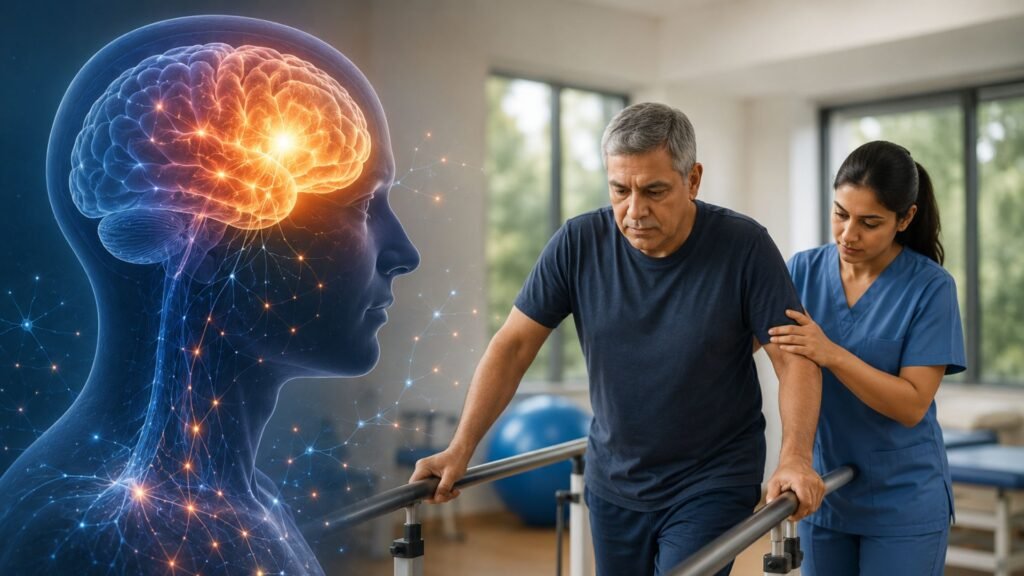
While there is no instant cure or shortcut, modern neuroscience has fundamentally changed our understanding of how the brain heals after stroke. Today, Neurosurgeon and rehabilitation specialists know that the brain possesses a remarkable ability to adapt, reorganize, and create new pathways after injury. This process is known as neuroplasticity, and it forms the foundation of modern stroke rehabilitation.
According to Dr. Gaurav Sharma, Neurosurgeon and Director of Advaith Ability, successful stroke recovery is not determined by luck alone. It depends on timely intervention, evidence-based rehabilitation, patient participation, family support, and the brain’s ability to relearn lost functions.
Understanding how neuroplasticity works—and how rehabilitation activates it—can help stroke survivors maximize their recovery potential and regain greater independence.
Understanding Stroke Recovery and Neuroplasticity
A stroke occurs when blood supply to a part of the brain is interrupted or significantly reduced. Without oxygen and nutrients, brain cells begin to suffer damage within minutes.
There are two primary types of stroke:
Ischemic Stroke
This occurs when a blood clot blocks an artery supplying blood to the brain. It is the most common type of stroke.
Hemorrhagic Stroke
This occurs when a blood vessel ruptures, causing bleeding within or around the brain.
The effects of stroke vary depending on the location and severity of brain injury.
Common challenges after stroke include:
- Weakness or paralysis
- Difficulty walking
- Poor balance and coordination
- Speech and language difficulties
- Swallowing problems
- Memory impairment
- Reduced concentration
- Emotional and behavioral changes
Historically, many people believed that damaged brain functions could never return.
Modern neuroscience has proven otherwise.
The brain has an extraordinary ability to adapt after injury through neuroplasticity.
What Is Neuroplasticity?
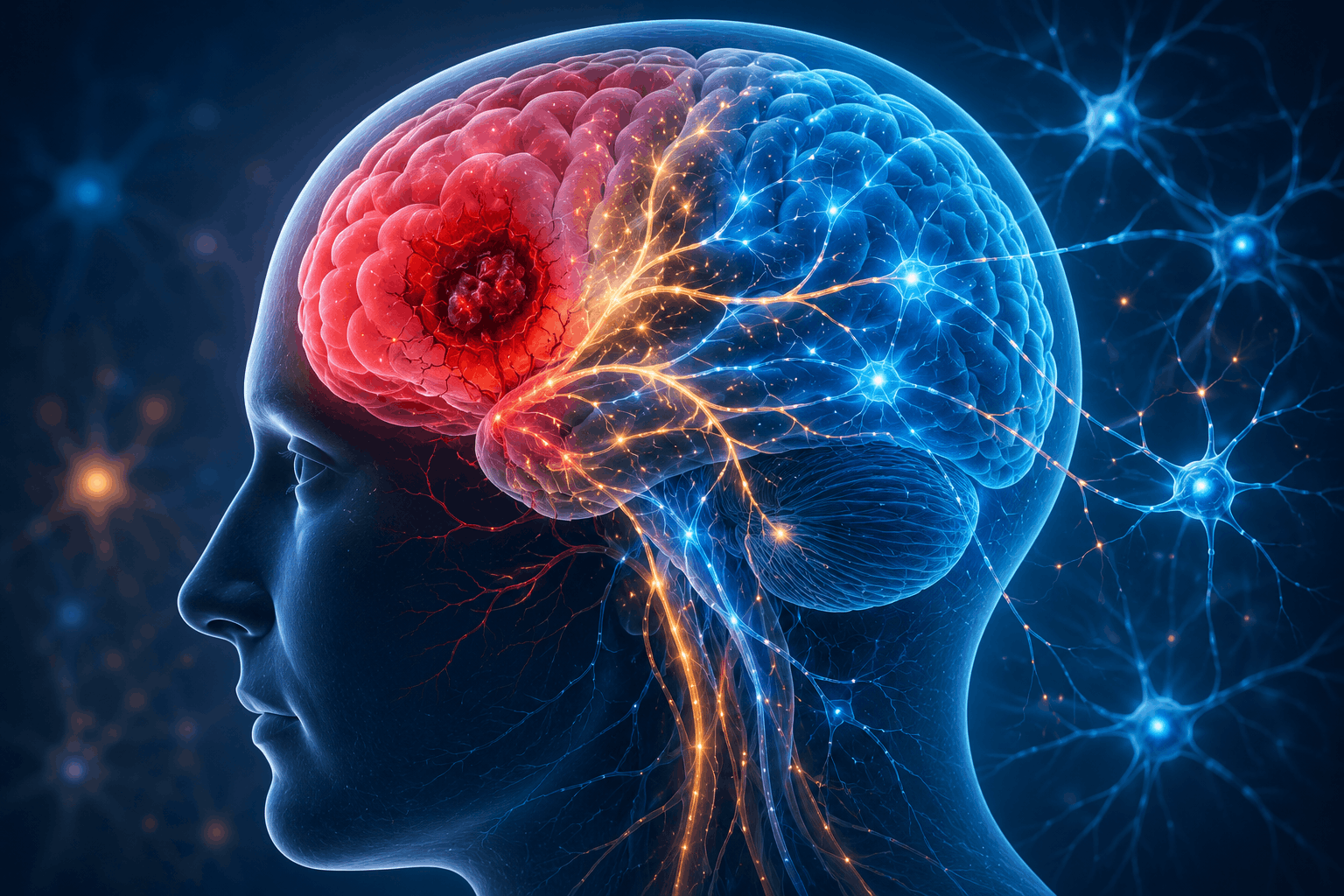
Neuroplasticity refers to the brain’s ability to reorganize itself by forming new neural connections.
Think of the brain as a network of roads connecting different destinations.
When a major road is damaged, traffic may be redirected through alternative routes.
Similarly, when a stroke damages part of the brain, healthy regions may learn to perform functions previously controlled by injured areas.
This adaptation does not happen automatically.
It requires:
- Repetition
- Functional practice
- Rehabilitation
- Cognitive engagement
- Consistent training
This is why rehabilitation is not simply about exercising muscles.
It is about teaching the brain to develop new pathways and improve communication between neurons and the body.
Why Early Rehabilitation Matters
One of the most important factors affecting stroke recovery is timing.
The brain enters a highly responsive state during the weeks and months following a stroke. During this period, it becomes more adaptable and more capable of forming new neural connections.
Many specialists refer to this period as the early recovery window.
Patients who begin rehabilitation as soon as medically appropriate often experience better functional outcomes than those who delay therapy.
Early rehabilitation can help:
- Improve mobility
- Prevent muscle stiffness
- Reduce complications
- Improve balance
- Enhance communication abilities
- Increase independence
According to Dr. Gaurav Sharma:
“The brain responds best when rehabilitation begins early. The goal is not simply to regain movement but to encourage the brain to develop new pathways that support long-term recovery.”
It is important to understand that recovery does not stop after the first few months.
Many patients continue improving for years.
However, early intervention often creates a stronger foundation for future progress.
Why Two Stroke Patients With Similar Brain Scans Can Have Completely Different Recovery Outcomes
One of the most fascinating realities in neurorehabilitation is that MRI scans do not always predict recovery outcomes.
Two patients may have similar strokes affecting similar areas of the brain, yet experience very different recovery journeys.
Why does this happen?
Because recovery depends on far more than the stroke itself.
Pre-Stroke Physical Health
Patients who were physically active before their stroke often recover faster than those who were largely sedentary.
Good cardiovascular health improves endurance and supports participation in rehabilitation.
Cognitive Reserve
People who regularly engage in mentally stimulating activities may possess greater cognitive reserve.
This concept refers to the brain’s ability to adapt and compensate when injury occurs.
Factors that may contribute include:
- Higher education
- Reading habits
- Professional problem-solving
- Lifelong learning
- Active social engagement
Mental and Emotional Health
Depression and anxiety are common after stroke.
These conditions can reduce motivation, therapy participation, and overall recovery potential.
Addressing emotional well-being is often just as important as physical rehabilitation.
Family Support
Patients rarely recover in isolation.
Families play a critical role in:
- Encouraging therapy participation
- Supporting daily exercises
- Maintaining motivation
- Creating a positive environment
Strong support systems frequently contribute to better outcomes.
Consistency of Rehabilitation
Even the best rehabilitation program cannot succeed without participation.
Patients who remain engaged and committed to therapy generally achieve better long-term results than those who discontinue treatment prematurely.
The Stroke Recovery Timeline: What Patients and Families Can Realistically Expect
One of the biggest sources of anxiety after stroke is uncertainty.
Patients often want to know:
- How long recovery will take
- When walking will improve
- When speech may return
- Whether independence is possible
While every patient is different, understanding common recovery stages can help set realistic expectations.
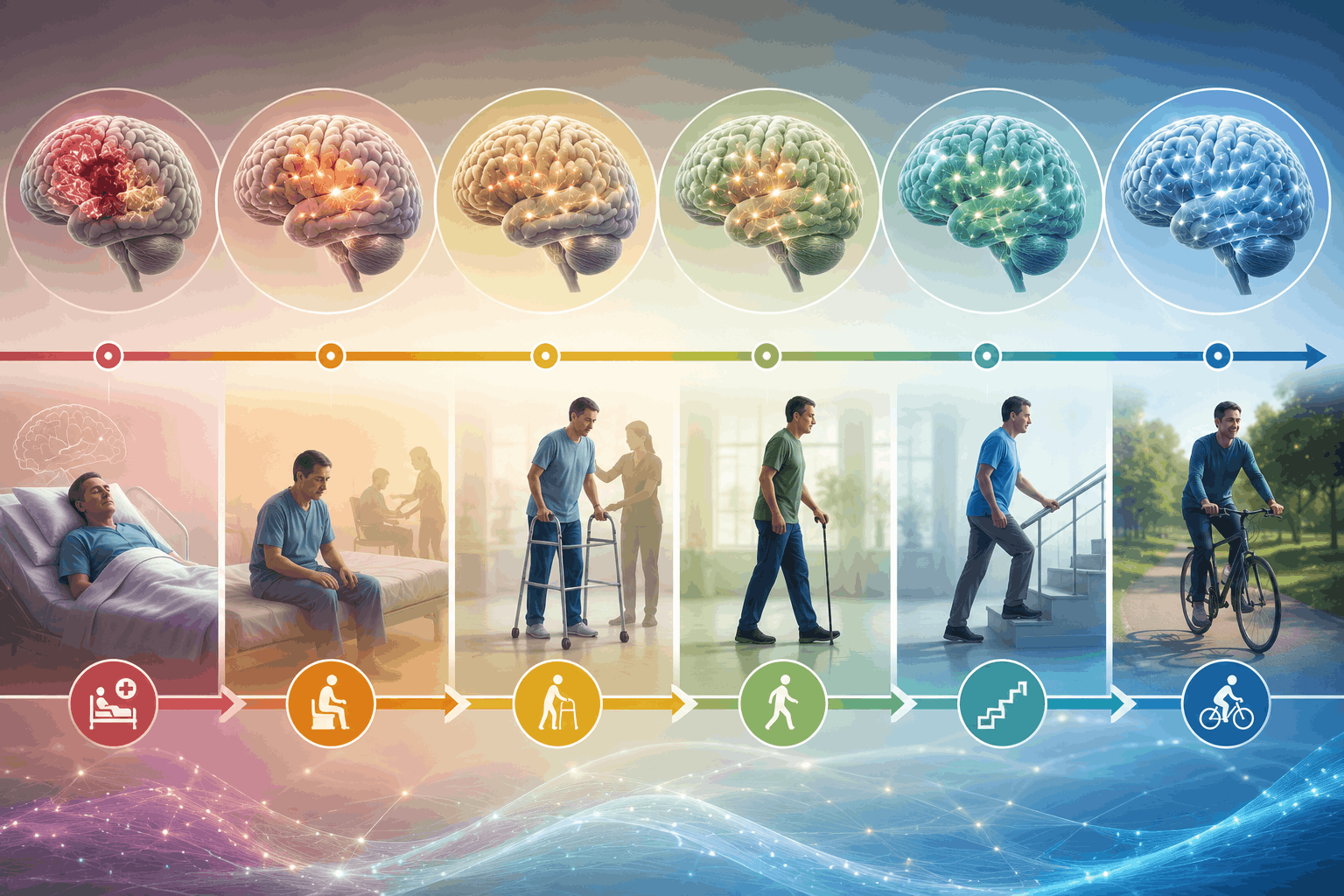
First 72 Hours
The immediate focus is medical stabilization.
Doctors work to:
- Protect brain tissue
- Prevent further injury
- Manage blood pressure
- Reduce complications
- Evaluate neurological deficits
At this stage, predicting long-term recovery can be difficult.
First Month
Many patients begin experiencing early improvements.
Swelling in the brain may decrease, allowing some functions to partially return.
Rehabilitation often begins during this phase.
Months 1–3
This is frequently the most active stage of recovery.
Patients may experience improvements in:
- Walking
- Balance
- Strength
- Speech
- Daily activities
This period is often highly responsive to rehabilitation efforts.
Months 3–6
Progress usually continues but may become less dramatic.
Many patients become discouraged during this phase because improvements appear slower.
This is normal.
Recovery is still occurring.
Months 6–12
The brain continues adapting.
Functional improvements may become more gradual, but gains in mobility, coordination, and communication can still occur.
Beyond One Year
A common myth is that recovery stops after one year.
In reality, neuroplasticity continues throughout life.
Many stroke survivors continue improving through:
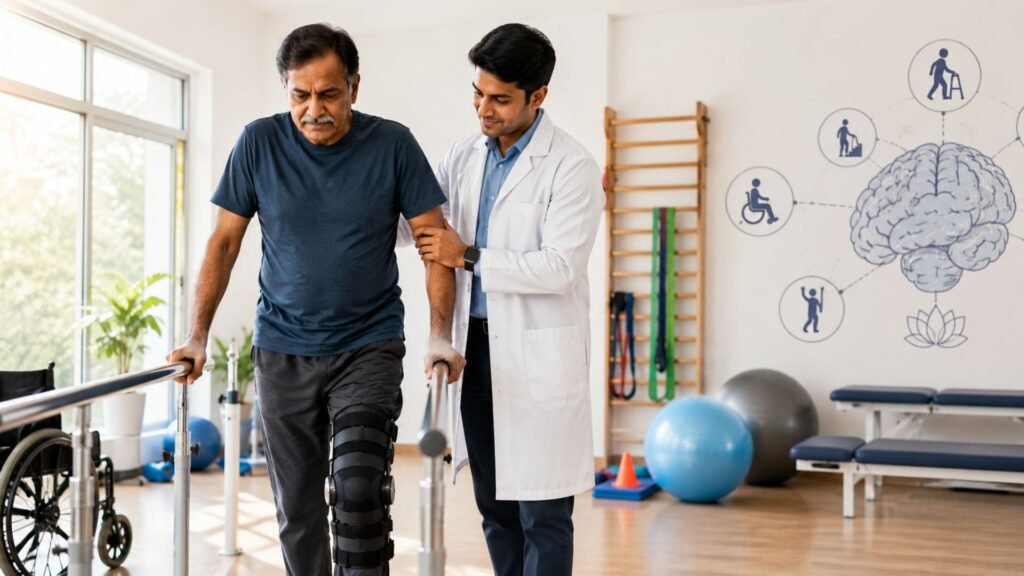
- Physiotherapy
- Occupational therapy
- Speech therapy
- Cognitive training
- Advanced neurorehabilitation
Meaningful recovery can continue long after the stroke itself.
Hidden Factors That Influence Stroke Recovery
Most discussions about stroke recovery focus on therapy sessions.
However, experienced rehabilitation professionals know that several less obvious factors can significantly influence outcomes.
Sleep Quality
The brain performs much of its learning and recovery during sleep.
Poor sleep may affect:
- Memory formation
- Motor learning
- Concentration
- Rehabilitation performance
Nutrition
Recovery requires energy and proper nutrition.
A balanced diet supports:
- Tissue repair
- Muscle strength
- Cognitive function
- Overall health
Blood Pressure Control
Poorly controlled blood pressure increases the risk of recurrent stroke and may interfere with rehabilitation progress.
Diabetes Management
Uncontrolled diabetes can affect healing and reduce overall recovery efficiency.
Social Engagement
Patients who remain socially connected often experience better emotional and cognitive outcomes than those who become isolated.
Motivation and Goal Setting
Recovery is often more successful when patients have clear, meaningful goals.
Examples include:
- Walking independently
- Returning to work
- Climbing stairs safely
- Resuming hobbies
- Participating in family activities
Goals provide direction and encourage consistent effort.
Looking for Advanced Stroke Rehabilitation?
At Advaith Ability, stroke rehabilitation programs are designed around the principles of neuroplasticity and evidence-based neurological recovery. Under the guidance of Dr. Gaurav Sharma, patients receive individualized treatment plans that may include physiotherapy, occupational therapy, speech therapy, cognitive rehabilitation, and advanced neurorehabilitation technologies.
Recovery after stroke is not solely about time passing. It is about how effectively the brain is stimulated, challenged, and supported during the healing process.
The Biggest Mistakes Families Make During Stroke Recovery
Stroke rehabilitation is not only about the patient. Family members often become caregivers, motivators, and support systems throughout the recovery journey.
However, some of the most common obstacles to recovery come from well-intentioned actions that unintentionally reduce rehabilitation effectiveness.
Doing Too Much for the Patient
Families often help with every task because they want to make life easier.
Unfortunately, excessive assistance can reduce opportunities for recovery.
For example:
- Feeding a patient who can partially feed themselves
- Dressing a patient who can participate in the activity
- Avoiding walking practice due to fear of falls
Neuroplasticity develops through practice. Every missed opportunity to perform a task independently is a missed opportunity for the brain to learn.
Comparing Recovery With Other Patients
No two strokes are identical.
Comparisons such as:
- “Someone else was walking in three months.”
- “My neighbor recovered much faster.”
can create frustration and unrealistic expectations.
Recovery depends on:
- Stroke severity
- Stroke location
- Age
- Overall health
- Rehabilitation intensity
- Family support
- Emotional well-being
The only meaningful comparison is a patient’s progress compared to their own previous abilities.
Focusing Only on Physical Recovery
Many families focus exclusively on walking and movement.
However, stroke may also affect:
- Memory
- Concentration
- Judgment
- Emotional regulation
- Communication
True recovery involves physical, cognitive, emotional, and social rehabilitation.
When More Therapy Can Actually Slow Recovery
Many people assume that if therapy helps, more therapy must be better.
In reality, rehabilitation requires balance.
Understanding Post-Stroke Fatigue
Post-stroke fatigue is a genuine neurological condition.
Patients may feel exhausted after activities that previously required little effort.
This happens because the brain is working harder to process information and control movement.
Common symptoms include:
- Mental exhaustion
- Reduced attention span
- Irritability
- Slower thinking
- Difficulty concentrating
The Problem With Overtraining
Excessive therapy may sometimes lead to:
- Frustration
- Poor movement quality
- Increased muscle tightness
- Reduced motivation
- Physical exhaustion
The goal is not maximum activity.
The goal is effective activity.
Quality Over Quantity
A focused rehabilitation session that encourages proper movement patterns is often more valuable than several hours of ineffective practice.
Successful rehabilitation balances:
- Exercise
- Recovery
- Sleep
- Nutrition
- Consistency
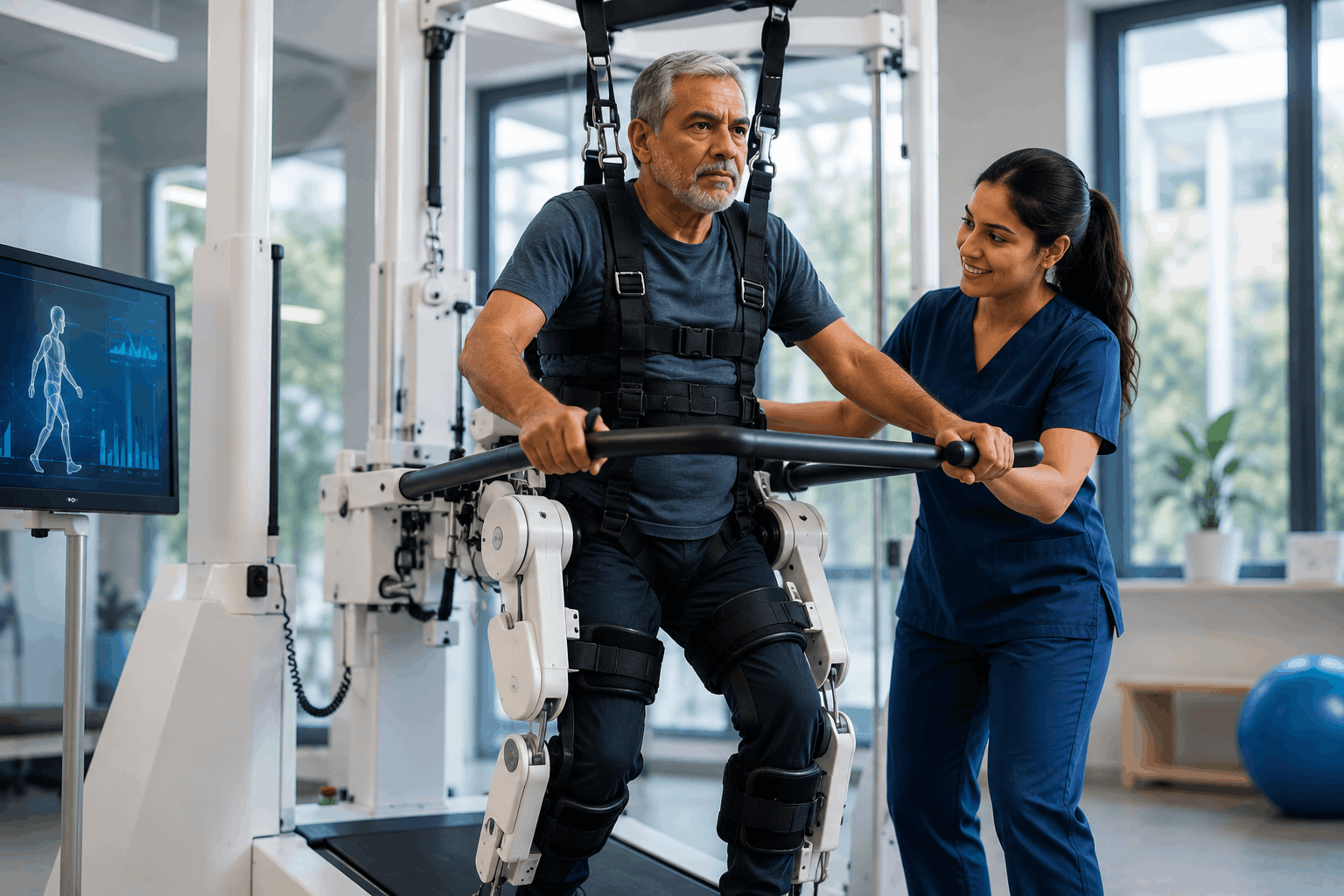
How Robotic Neuro Rehabilitation Is Transforming Stroke Recovery
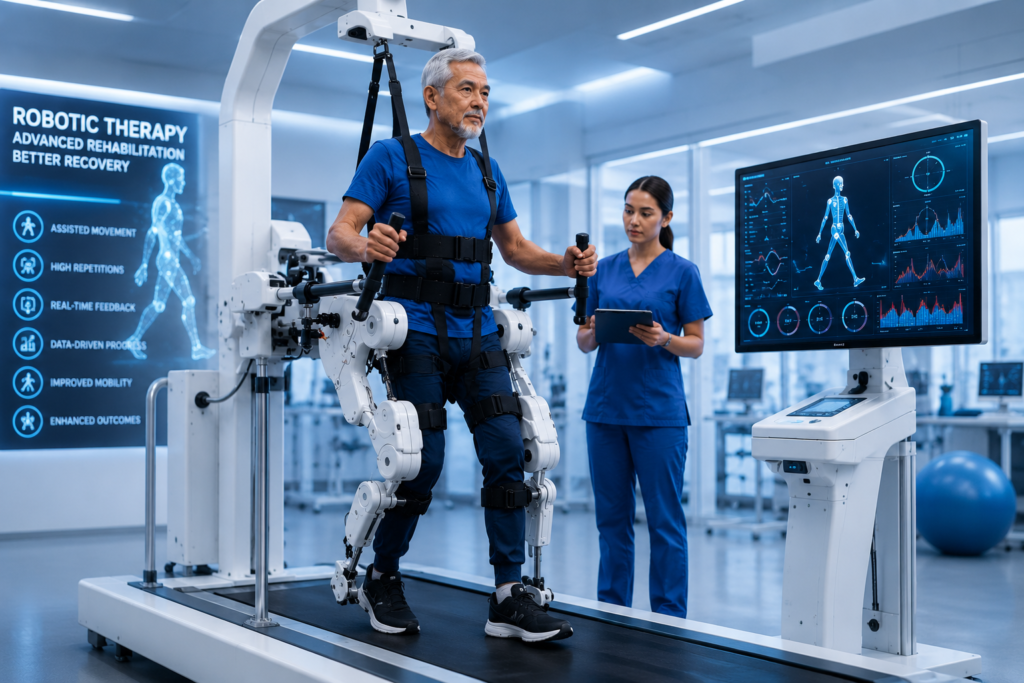
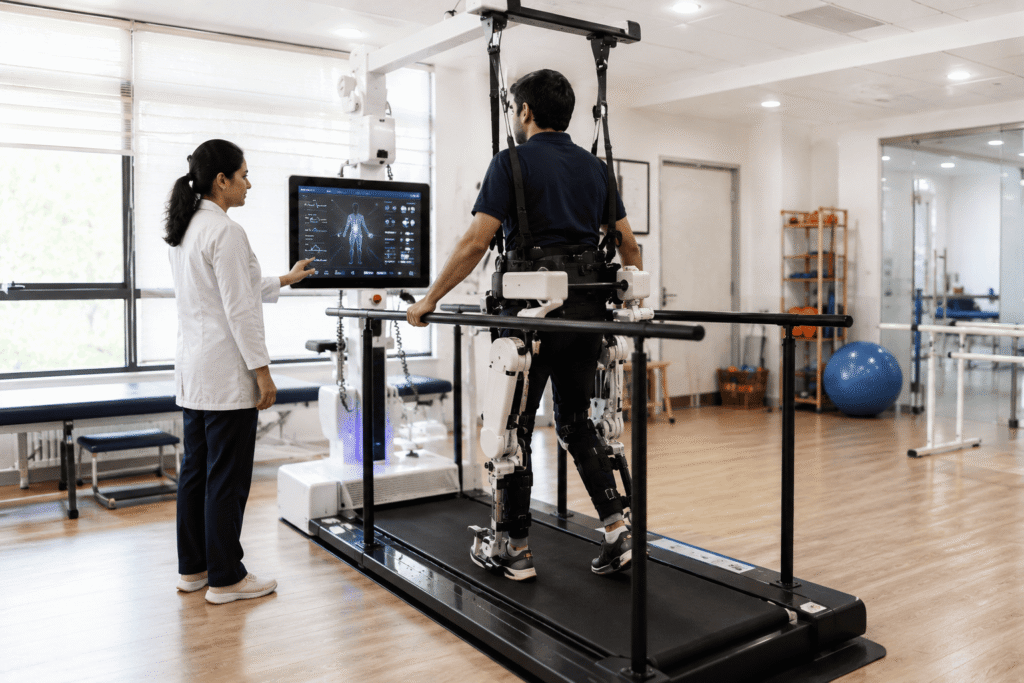
One of the most significant advances in neurological rehabilitation is the introduction of robotic-assisted therapy.
Modern rehabilitation technology allows patients to perform highly repetitive, controlled, and measurable movements that support neuroplasticity.
What Is Robotic Neuro Rehabilitation?
Robotic rehabilitation uses specialized devices designed to assist movement training.
These systems help patients practice functional movements repeatedly while maintaining accuracy and consistency.
Examples include:
- Robotic gait training
- Upper limb rehabilitation systems
- Balance rehabilitation devices
- Functional movement training technologies
Who Benefits Most?
Robotic rehabilitation may be particularly helpful for patients with:
- Paralysis
- Significant weakness
- Poor motor control
- Balance impairments
- Long-term neurological deficits
What Robotic Rehabilitation Cannot Do
Technology is not a replacement for therapists.
Successful rehabilitation still requires:
- Clinical expertise
- Individual assessment
- Goal setting
- Progress monitoring
- Personalized treatment planning
The most effective programs combine advanced technology with experienced rehabilitation professionals.
Stroke Recovery Red Flags That Should Never Be Ignored
While recovery challenges are expected after stroke, certain symptoms require immediate medical attention.
Patients and caregivers should contact a healthcare professional promptly if they notice:
Sudden New Weakness
Any sudden reduction in strength may indicate a medical emergency.
New Speech Difficulties
Sudden changes in speech or communication should never be ignored.
Severe Headaches
A sudden severe headache, especially if accompanied by neurological symptoms, requires urgent evaluation.
Frequent Falls
Repeated falls may indicate worsening balance, medication issues, or other neurological concerns.
Uncontrolled Blood Pressure
Poor blood pressure control increases the risk of another stroke.
Significant Changes in Awareness or Behavior
Confusion, unusual drowsiness, or sudden behavioral changes should be medically assessed.
Early intervention may prevent serious complications.
Myth vs Reality: Common Stroke Recovery Misconceptions
|
Myth |
Reality |
|
Recovery stops after six months. |
Recovery can continue for years through neuroplasticity and rehabilitation. |
|
Older stroke patients cannot recover well. |
Many older adults achieve meaningful improvements with structured rehabilitation. |
|
Walking means full recovery. |
Cognitive, emotional, and communication challenges may still remain. |
|
Rest alone heals the brain. |
Rehabilitation and active participation are essential for recovery. |
|
Robotic rehabilitation replaces therapists. |
Technology supports rehabilitation but does not replace clinical expertise. |
|
Speech problems are always permanent. |
Many patients continue improving communication abilities for years. |
|
Recovery follows a predictable timeline. |
Every stroke survivor has a unique recovery journey. |
|
Strong muscles guarantee independence. |
Functional skills and coordination are equally important.
|
Can a Stroke Patient Recover 100%?
This is one of the most frequently asked questions in neurological rehabilitation.
The honest answer is:
It depends.
Some patients regain nearly all lost functions.
Others continue to experience certain limitations despite significant improvement.
Recovery potential depends on multiple factors.
Stroke Severity
Smaller strokes generally have a better prognosis than extensive brain injuries.
Stroke Location
Different areas of the brain control different functions.
The location of injury strongly influences recovery outcomes.
Timing of Rehabilitation
Patients who begin rehabilitation early often achieve better functional results.
Patient Participation
Motivation, consistency, and engagement remain critical throughout the recovery process.
Overall Health
Conditions such as diabetes, hypertension, obesity, and heart disease can affect rehabilitation outcomes.
The goal should not always be perfection.
The goal should be maximizing independence, quality of life, and functional ability.

Expert Advice From Dr. Gaurav Sharma
After years of managing neurological conditions and working closely with stroke rehabilitation teams, Dr. Gaurav Sharma emphasizes several principles that consistently contribute to better outcomes.
Start Rehabilitation Early
The sooner rehabilitation begins, the greater the opportunity to stimulate neuroplasticity and improve long-term function.
Stay Consistent
Recovery is rarely dramatic from one day to the next.
Small improvements accumulate over time.
Consistency is often more important than intensity.
Focus on Functional Goals
Recovery becomes more meaningful when goals relate directly to daily life.
Examples include:
- Walking independently
- Climbing stairs
- Returning to work
- Communicating clearly
- Managing daily activities
Take Care of Emotional Health
Depression and anxiety are common after stroke.
Addressing emotional well-being is an important part of rehabilitation.
Be Patient With Progress
Recovery is not always linear.
Periods of slower progress do not necessarily mean rehabilitation has stopped working.
According to Dr. Gaurav Sharma:
“One of the biggest misconceptions about stroke recovery is that improvement stops after a certain deadline. The brain remains capable of adaptation throughout life. With appropriate rehabilitation, many patients achieve meaningful improvements long after their stroke.”
Frequently Asked Questions
How long does stroke recovery take?
Recovery timelines vary significantly. Some patients improve rapidly within months, while others continue progressing for years.
Can neuroplasticity continue years after stroke?
Yes. Neuroplasticity remains active throughout life and supports ongoing recovery when the brain is challenged through rehabilitation and meaningful activities.
Can elderly stroke patients recover successfully?
Yes. Age may influence recovery speed, but many older adults achieve significant improvements through structured rehabilitation.
When should stroke rehabilitation begin?
Rehabilitation should begin as soon as medically appropriate under professional supervision.
Does physiotherapy help stroke recovery?
Yes. Physiotherapy plays a vital role in improving movement, balance, strength, and functional independence.
What is robotic neuro rehabilitation?
Robotic neuro rehabilitation uses advanced technology to support repetitive movement training and promote neurological recovery.
Can speech improve after stroke?
Many patients continue improving speech and communication skills through speech therapy and ongoing practice.
What increases the risk of another stroke?
Common risk factors include uncontrolled blood pressure, diabetes, smoking, obesity, heart disease, and poor lifestyle habits.
Conclusion
Stroke recovery is not simply a matter of waiting for the brain to heal. It is an active process that depends on neuroplasticity, rehabilitation, consistency, and long-term commitment.
While every recovery journey is unique, evidence consistently shows that patients achieve better outcomes when rehabilitation begins early, remains structured, and focuses on meaningful functional goals.
Modern advances in neurorehabilitation, including physiotherapy, occupational therapy, speech therapy, cognitive rehabilitation, and robotic-assisted therapy, have created new opportunities for stroke survivors to regain independence and improve their quality of life.
Most importantly, recovery should never be defined by arbitrary deadlines. The brain retains the ability to adapt and learn throughout life.
Stroke Rehabilitation at Advaith Ability
If you or a loved one is recovering from stroke, professional guidance can make a significant difference.
Under the leadership of Dr. Gaurav Sharma, Neurosurgeon and Director of Advaith Ability, patients receive comprehensive, evidence-based rehabilitation programs designed to maximize recovery, improve independence, and enhance quality of life.
Whether recovery is in its early stages or years after the stroke, the right rehabilitation approach can help unlock new possibilities for progress and functional improvement.
Advaith Ability
Bharat Tower, Shimla Bypass Road, Dehradun – 248171
Ph.: +91 99152-10539, +91 9915210578
Email: rehab@advaithability.com
Website: www.advaithability.com
Follow : Instagram | Facebook | YouTube
Also read : Looking for the Best Neuro Rehabilitation Center in Dehradun?