What is Neuro Rehabilitation? A Complete Guide to Recovery After Stroke, Paralysis & Brain Injury
Neurological conditions such as stroke, paralysis, spinal cord injury, traumatic brain injury, and Parkinson’s disease can deeply affect a person’s movement, speech, balance, coordination, and ability to perform daily activities independently. Recovery from these conditions often requires much more than medication or surgery alone.
This is where neuro rehabilitation plays a vital role.
Neuro rehabilitation is a specialized treatment approach designed to help patients recover physical function, improve independence, and regain confidence after neurological disorders or injuries affecting the brain, spinal cord, and nervous system.
With the right rehabilitation program, many patients can significantly improve their quality of life and regain important abilities over time.
At Advaith Ability, advanced neuro rehabilitation programs combine physiotherapy, robotic rehabilitation, occupational therapy, speech therapy, and personalized recovery plans to support long-term healing and recovery.
What is Neuro Rehabilitation?
Neuro rehabilitation, also called neurological rehabilitation, is a specialized branch of rehabilitation focused on helping individuals recover from neurological conditions that affect the nervous system.
The nervous system includes:
- Brain
- Spinal cord
- Nerves throughout the body
When these systems are damaged due to illness, injury, or disease, patients may experience:
- Weakness
- Paralysis
- Poor balance
- Difficulty walking
- Speech problems
- Muscle stiffness
- Loss of coordination
- Difficulty performing daily activities
Neuro rehabilitation aims to improve these functions through targeted therapies and structured recovery programs.
The primary goals of neuro rehabilitation are:
- Restoring mobility
- Improving muscle strength
- Enhancing balance and coordination
- Improving speech and communication
- Increasing independence
- Improving quality of life
Unlike general physiotherapy, neuro rehabilitation specifically focuses on conditions involving the brain, spinal cord, and nervous system.
Who Needs Neuro Rehabilitation?
Neuro rehabilitation can benefit patients of all age groups, including children, adults, and elderly individuals dealing with neurological conditions or injuries.
Patients who may need neuro rehabilitation include those affected by:
- Stroke
- Paralysis
- Spinal cord injury
- Brain injury
- Parkinson’s disease
- Cerebral palsy
- Multiple sclerosis
- Neuropathy
- Bell’s palsy
- Post-surgical neurological weakness
- Balance and coordination disorders
Early rehabilitation can often improve recovery outcomes significantly.
Neurological Conditions Treated with Neuro Rehabilitation
Stroke Rehabilitation
Stroke occurs when blood flow to the brain is interrupted, leading to damage in brain tissues. Depending on the affected area of the brain, patients may experience weakness, speech difficulties, balance problems, or paralysis.
Stroke rehabilitation focuses on:
- Improving movement
- Regaining balance
- Strengthening weak muscles
- Restoring walking ability
- Improving speech and communication
- Enhancing daily functioning
Consistent rehabilitation after stroke can greatly improve recovery potential and independence.
Paralysis Rehabilitation
Paralysis rehabilitation helps individuals who have lost muscle movement due to neurological damage. Paralysis may result from stroke, spinal cord injury, trauma, or other neurological disorders.
Therapy programs may include:
- Muscle strengthening
- Gait training
- Balance exercises
- Functional movement therapy
- Mobility improvement
- Robotic rehabilitation
The goal is to maximize functional recovery and improve independence.
Spinal Cord Injury Rehabilitation
Spinal cord injuries can affect movement, sensation, balance, and muscle control depending on the level and severity of the injury.
Neuro rehabilitation for spinal cord injury focuses on:
- Mobility training
- Posture correction
- Muscle strengthening
- Wheelchair management
- Functional independence
- Balance training
Specialized rehabilitation can help patients improve their quality of life and functional abilities.
Brain Injury Rehabilitation
Traumatic brain injuries can affect physical movement, speech, cognition, memory, concentration, and emotional well-being.
Brain injury rehabilitation may include:
- Cognitive therapy
- Physiotherapy
- Speech therapy
- Occupational therapy
- Balance and coordination training
Rehabilitation aims to help patients regain physical and cognitive function gradually.
Parkinson’s Disease Rehabilitation
Parkinson’s disease is a progressive neurological condition that affects movement and coordination.
Common symptoms include:
- Tremors
- Muscle stiffness
- Slow movement
- Poor balance
- Difficulty walking
Neuro rehabilitation for Parkinson’s disease focuses on improving:
- Mobility
- Coordination
- Posture
- Walking ability
- Balance
- Functional independence
Structured therapy can help patients maintain better mobility and confidence.
Cerebral Palsy Rehabilitation
Cerebral palsy affects movement, posture, and muscle coordination in children.
Pediatric neuro rehabilitation programs may help improve:
- Motor skills
- Balance
- Coordination
- Muscle control
- Functional independence
- Mobility
Early intervention often plays an important role in improving long-term outcomes for children.
Multiple Sclerosis Rehabilitation
Multiple sclerosis is a neurological disorder that affects communication between the brain and body.
Patients may experience:
- Muscle weakness
- Fatigue
- Balance issues
- Coordination problems
- Difficulty walking
Rehabilitation programs can help improve strength, mobility, endurance, and overall daily functioning.
Neuropathy Rehabilitation
Neuropathy occurs when nerves become damaged, leading to symptoms such as:
- Numbness
- Tingling
- Burning sensations
- Weakness
- Difficulty walking
Neuro rehabilitation may help improve muscle strength, balance, coordination, and functional mobility in neuropathy patients.
Bell’s Palsy Rehabilitation
Bell’s palsy causes sudden weakness or paralysis of facial muscles due to facial nerve involvement.
Rehabilitation for Bell’s palsy focuses on:
- Facial muscle strengthening
- Facial coordination exercises
- Improving facial symmetry
- Supporting nerve recovery
Early therapy may help improve recovery outcomes.
Post-Surgical Neurological Rehabilitation
Patients recovering from neurological surgeries may require rehabilitation to regain:
- Mobility
- Muscle strength
- Coordination
- Balance
- Functional independence
Structured rehabilitation programs support safer and faster recovery after surgery.
Balance and Coordination Disorder Rehabilitation
Balance disorders can increase the risk of falls and reduce confidence during walking or movement.
Patients experiencing dizziness, instability, or coordination problems may benefit from:
- Balance training
- Gait training
- Postural exercises
- Functional mobility therapy
These therapies aim to improve stability and movement confidence.
How Does Neuro Rehabilitation Work?
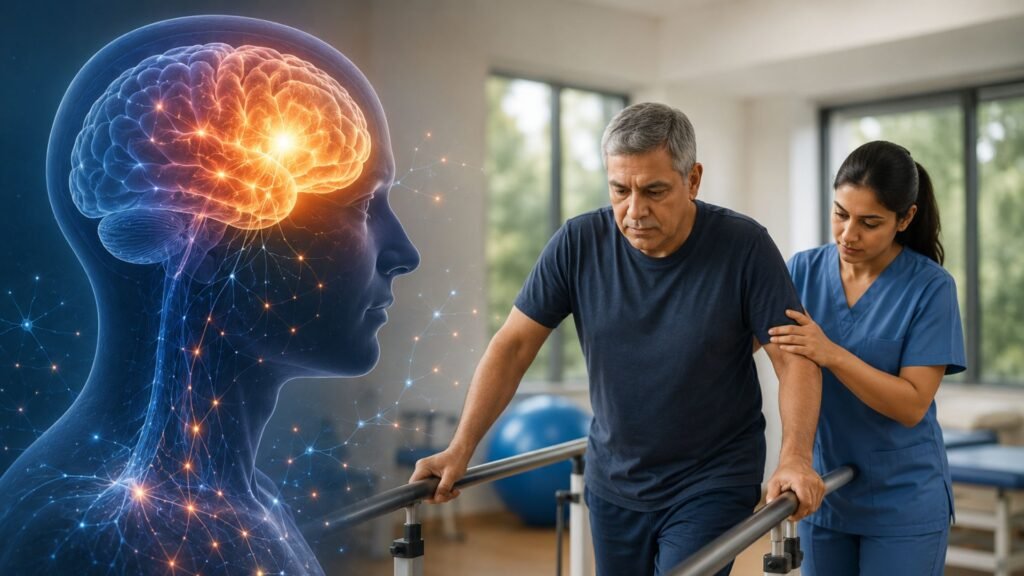
Neuro rehabilitation works by helping the brain and nervous system relearn skills and create new neural pathways after injury or damage.
Each patient receives a customized rehabilitation plan based on:
- Medical condition
- Severity of neurological damage
- Physical abilities
- Age
- Recovery goals
- Functional limitations
Treatment programs are usually developed by a multidisciplinary team that may include:
- Physiotherapists
- Occupational therapists
- Speech therapists
- Rehabilitation specialists
The recovery process involves repetitive training, guided movement exercises, balance activities, strengthening programs, and functional therapy.
Neuroplasticity Explained Simply
One of the most important concepts behind neuro rehabilitation is neuroplasticity.
Neuroplasticity refers to the brain’s ability to reorganize itself and form new neural connections after injury.
Even if a part of the brain is damaged, healthy areas of the brain can sometimes learn to take over lost functions through repetitive therapy and rehabilitation exercises.
This is why:
- Repetition is important
- Consistent therapy matters
- Early rehabilitation improves recovery chances
The brain learns and adapts through practice and guided movement training.
Why Some Neuro Rehabilitation Patients Improve Faster Than Others
One of the biggest hidden realities in neuro rehabilitation is that recovery is highly individual.
Two patients with similar MRI reports or similar strokes may recover very differently. In real clinical practice, recovery depends on many hidden factors beyond the diagnosis itself.
Therapy Quality Matters More Than Just Therapy Duration
Many people believe that more therapy hours automatically lead to better results. However, poorly guided repetitive exercises may not produce effective neurological recovery.
In neuro rehabilitation:
- Correct movement patterns matter
- Task-specific training matters
- Brain engagement matters
- Consistency matters more than intensity alone
Sometimes shorter but highly targeted therapy sessions produce better outcomes than long unfocused exercise routines.
The “Learned Non-Use” Problem
Many stroke or paralysis patients unconsciously stop using their weaker limb completely.
Over time, the brain adapts to compensation instead of recovery.
For example:
- Patients rely only on the stronger hand
- Families assist excessively
- Patients avoid difficult movements
This may silently reduce long-term functional recovery.
Advanced neuro rehabilitation often encourages safe and guided use of the affected limb to stimulate brain adaptation.
Emotional Health Directly Affects Physical Recovery
Neurological recovery is not only physical.
Patients dealing with:
- Depression
- Fear of falling
- Anxiety
- Frustration
- Low confidence
often participate less actively in therapy.
Reduced participation affects neuroplasticity and slows recovery progress.
Mental and emotional support are extremely important parts of successful rehabilitation.
Recovery Plateaus Are Common
Many patients experience periods where progress slows down.
This does not always mean recovery has stopped permanently.
Sometimes recovery improves again after:
- Changing therapy techniques
- Increasing task complexity
- Introducing robotic rehabilitation
- Improving motivation
- Addressing hidden complications
Neurological recovery is rarely linear.
Myth vs Reality in Neuro Rehabilitation
|
Myth |
Reality |
|
Recovery only happens in the first few months |
Functional recovery can continue for years with proper rehabilitation |
|
Robotic rehabilitation alone can cure paralysis |
Robotics support movement training but cannot replace active therapy participation |
|
Walking means complete recovery |
Many patients still struggle with balance, endurance, coordination, or cognitive challenges |
|
More exercise is always better |
Excessive training can worsen fatigue or spasticity in some neurological conditions |
|
Severe brain damage means no improvement is possible |
Some patients achieve meaningful functional recovery despite major neurological injury |
|
Every stroke patient recovers the same way |
Recovery depends on brain area affected, age, health condition, motivation, and therapy quality |
Understanding these realities helps families develop more realistic expectations and long-term rehabilitation commitment.
Hidden Complications That Can Slow Neuro Rehabilitation Recovery
Many rehabilitation setbacks occur not because therapy failed, but because secondary complications were ignored.
Experienced neuro rehabilitation teams closely monitor these hidden issues.
Spasticity and Muscle Tightness
Neurological patients often develop muscle stiffness known as spasticity.
This can:
- Limit movement
- Cause pain
- Affect walking
- Reduce balance
- Interfere with exercises
Incorrect exercises or overexertion may sometimes worsen spasticity temporarily.
Proper stretching, positioning, and guided movement therapy are essential.
Shoulder Pain After Stroke
Shoulder pain and shoulder subluxation are common after stroke but often ignored.
Improper arm handling during transfers or exercises may worsen pain and reduce therapy participation.
Families should receive proper education about safe handling techniques.
Neurological Fatigue
Many patients experience severe fatigue even after small activities.
This is not simple tiredness.
Neurological fatigue can affect:
- Concentration
- Walking performance
- Balance
- Motivation
- Therapy participation
Advanced rehabilitation programs carefully balance therapy intensity and recovery time.
Fear of Falling
After stroke or balance disorders, many patients become afraid of movement.
This fear can:
- Reduce confidence
- Limit walking attempts
- Increase dependency
- Slow recovery progress
Balance training and confidence-building exercises become extremely important in these cases.
Advanced Neuroplasticity Strategies Used in Modern Neuro Rehabilitation
Advanced neuro rehabilitation is much more than simple exercise repetition.
Modern rehabilitation focuses on training the brain to relearn movement patterns through scientifically guided strategies.
Task-Specific Training
The brain learns functional tasks better than isolated exercises.
For example:
- Practicing standing improves standing
- Practicing walking improves walking
- Practicing reaching improves reaching
This is why modern neuro rehabilitation emphasizes real-world movement practice instead of only machine-based exercise.
Constraint-Induced Movement Therapy
In selected stroke patients, therapists may temporarily reduce use of the stronger limb to encourage use of the weaker limb.
This technique can stimulate neuroplasticity and improve recovery in some patients.
However, it must be carefully supervised and is not suitable for everyone.
Mirror Therapy and Sensory Feedback Training
Mirror therapy uses visual feedback to stimulate brain activity and improve movement awareness.
Other advanced sensory techniques may include:
- Tactile stimulation
- Sensor-based therapy
- Visual movement feedback
- Virtual reality rehabilitation
These approaches help improve motor relearning.
Dual-Task Rehabilitation
Real-life movement often requires multitasking.
Advanced rehabilitation may train patients to:
- Walk while talking
- Maintain balance while thinking
- Navigate distractions safely
This improves real-world functional independence.
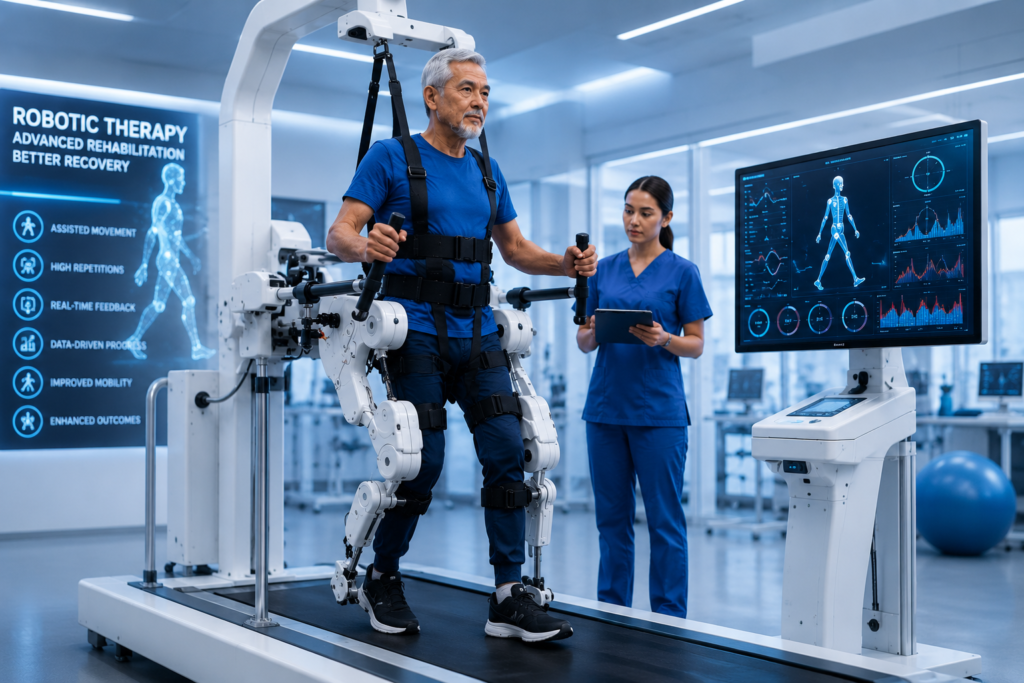
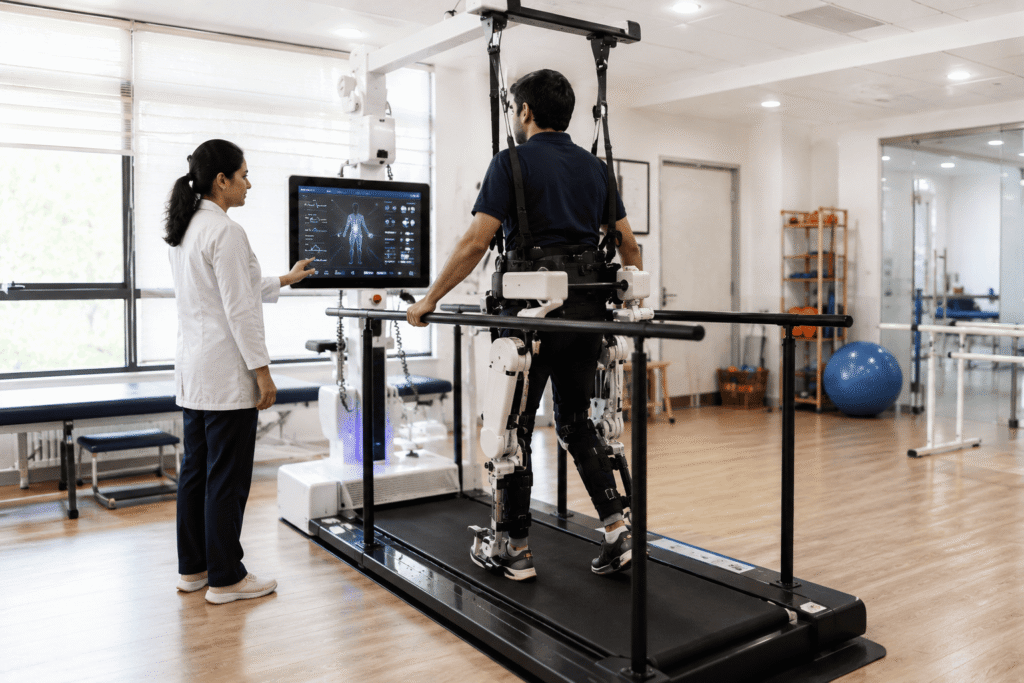
Robotic Rehabilitation & Advanced Therapies
Modern neuro rehabilitation has advanced significantly with the introduction of robotic rehabilitation technologies and advanced therapy systems.
Advanced neuro rehabilitation may include:
- Robotic gait training
- Balance rehabilitation systems
- Functional electrical stimulation
- Sensor-based movement therapy
- Virtual reality rehabilitation
- Advanced physiotherapy techniques
These technologies help patients perform repetitive and precise movements that support neurological recovery.
Benefits of robotic rehabilitation may include:
- Improved walking ability
- Better balance
- Enhanced coordination
- Increased muscle memory
- Improved movement control
Advanced therapy systems can support faster and more effective rehabilitation outcomes in many neurological conditions.
Physiotherapy in Neuro Rehabilitation
Physiotherapy is one of the most important parts of neuro rehabilitation.
It focuses on improving:
- Muscle strength
- Mobility
- Walking ability
- Balance
- Coordination
- Flexibility
- Functional movement
Physiotherapy programs are designed according to the patient’s condition and recovery stage.
Regular physiotherapy can help patients improve movement confidence and physical independence.
Occupational Therapy in Neuro Rehabilitation
Occupational therapy helps patients regain the ability to perform daily activities independently.
This may include:
- Dressing
- Eating
- Bathing
- Writing
- Hand coordination tasks
- Personal care activities
The goal is to improve functional independence and quality of life.
Speech Therapy in Neuro Rehabilitation
Neurological conditions can affect speech, communication, and swallowing abilities.
Speech therapy may help improve:
- Speech clarity
- Communication skills
- Swallowing function
- Cognitive communication abilities
Speech rehabilitation is especially important after stroke and brain injury.
What Advanced Neuro Rehabilitation Centers Do Differently
The quality of the rehabilitation center can significantly affect recovery outcomes.
Experienced neuro rehabilitation centers usually focus on much more than routine exercise sessions.
Multidisciplinary Coordination
Advanced recovery often requires coordination between:
- Physiotherapists
- Occupational therapists
- Speech therapists
- Rehabilitation specialists
Integrated rehabilitation plans improve functional outcomes.
Functional Goal Tracking
Experienced rehabilitation teams track practical improvements such as:
- Walking quality
- Balance confidence
- Transfer ability
- Hand function
- Endurance
- Daily activity independence
This allows therapy plans to evolve continuously.
Personalized Progression
Rehabilitation programs should change as patients improve.
Repeating identical therapy routines for months may reduce progress potential.
Advanced centers regularly adjust:
- Exercise difficulty
- Movement patterns
- Balance challenges
- Functional activities
based on patient progress.
Family Education
Successful rehabilitation often depends heavily on family involvement.
Families may need guidance regarding:
- Safe transfers
- Positioning
- Home exercises
- Fall prevention
- Encouragement strategies
Proper home support can significantly improve recovery consistency.
Recovery Timeline in Neuro Rehabilitation
Recovery timelines vary from patient to patient.
Factors affecting recovery include:
- Type of neurological condition
- Severity of damage
- Patient age
- Overall health condition
- Consistency of therapy
- Time taken to begin rehabilitation
- Emotional and psychological support
- Presence of secondary complications
Some patients may experience improvements within a few weeks, while others may require long-term rehabilitation over several months or years.
Neurological recovery is often gradual and requires patience, commitment, and consistent therapy.
Importance of Early Intervention
Early rehabilitation is extremely important after neurological injury or illness.
Starting rehabilitation early may help:
- Prevent muscle stiffness
- Improve brain adaptation
- Reduce complications
- Improve mobility faster
- Increase recovery potential
- Improve long-term independence
Delaying rehabilitation may slow down recovery and reduce functional improvement opportunities.
Why Choosing the Right Neuro Rehabilitation Center Matters
Choosing the right neuro rehabilitation center can significantly affect the quality and speed of recovery.
A specialized neuro rehabilitation center should provide:
- Experienced rehabilitation professionals
- Personalized treatment plans
- Advanced therapy technologies
- Multidisciplinary care
- Regular progress monitoring
- Patient-centered rehabilitation programs
Proper guidance, structured therapy, and advanced rehabilitation support can make a major difference in recovery outcomes.
Why Advaith Ability is Different
Advaith Ability is focused on advanced neuro rehabilitation and physiotherapy center designed to support patients recovering from neurological conditions and injuries.
The center offers:
- Advanced robotic neuro rehabilitation
- Personalized rehabilitation programs
- Stroke and paralysis rehabilitation
- Pediatric neuro rehabilitation
- Modern physiotherapy support
- Multidisciplinary rehabilitation care
- Patient-focused treatment planning
- Advanced rehabilitation technologies
The goal is to help patients regain movement, improve independence, and achieve better quality of life through structured and evidence-based rehabilitation programs.
Conclusion
Neuro rehabilitation plays a crucial role in helping patients recover after neurological conditions such as stroke, paralysis, spinal cord injury, brain injury, Parkinson’s disease, and other nervous system disorders.
With early intervention, consistent therapy, advanced rehabilitation techniques, and expert guidance, many patients can improve mobility, regain independence, and enhance their overall quality of life.
Recovery may take time, and every patient’s journey is different. However, the right rehabilitation approach, personalized therapy, emotional support, and long-term commitment can make a life-changing difference.
Frequently Asked Questions (FAQs)
What is neuro rehabilitation?
Neuro rehabilitation is a specialized therapy program designed to help people recover from neurological conditions affecting the brain, spinal cord, and nervous system.
Who needs neuro rehabilitation?
Patients recovering from stroke, paralysis, spinal cord injury, brain injury, Parkinson’s disease, cerebral palsy, neuropathy, and other neurological disorders may benefit from neuro rehabilitation.
How long does neuro rehabilitation take?
Recovery timelines vary depending on the patient’s condition, severity of injury, age, and consistency of therapy. Some patients improve within weeks, while others may require longer rehabilitation programs.
Can paralysis patients recover with neuro rehabilitation?
Many paralysis patients experience improvement in movement, strength, mobility, and independence through structured rehabilitation programs.
What therapies are included in neuro rehabilitation?
Neuro rehabilitation may include physiotherapy, occupational therapy, speech therapy, robotic rehabilitation, balance training, and cognitive therapy.
What is robotic rehabilitation?
Robotic rehabilitation uses advanced robotic technologies to help patients perform repetitive movement exercises that improve walking ability, balance, coordination, and muscle control.
Why is early rehabilitation important after stroke?
Early rehabilitation helps improve brain adaptation, reduce complications, improve mobility faster, and increase recovery potential after stroke or neurological injury.